How a Community Platform Can Transform Customer Engagement and Retention
Feb 18, 2026

If you're responsible for keeping customers engaged and coming back, you've probably felt the pressure. No matter how great your product is, keeping users active, satisfied, and loyal isn't getting any easier. Support tickets pile up, churn rates creep upward, and sometimes it feels like you're shouting into a void trying to connect with your customer base.
Here's the good news: you're not alone in facing these challenges, and there's a proven solution that's been quietly transforming how SaaS companies approach customer relationships. Community platforms have emerged as one of the most powerful tools for driving meaningful engagement and slashing churn rates, and the data backs it up.
According to recent industry research, brands with active online communities experience a 53% higher customer retention rate compared to those without. Even more compelling, effective community engagement can boost retention by up to 124% while simultaneously reducing support costs. For community managers and customer success teams, these aren't just impressive numbers they represent a fundamental shift in how we think about customer relationships.
Let me walk you through exactly how community platforms deliver these results and why they might be the missing piece in your engagement strategy.
The Engagement Problem Most SaaS Companies Face
Before we dive into solutions, let's acknowledge the elephant in the room. Traditional customer engagement tactics, email campaigns, occasional surveys, one-on-one support tickets, create disconnected experiences. Customers interact with your brand in isolated moments, never building the sustained connection that drives long-term loyalty.
Meanwhile, your support team is overwhelmed answering the same questions repeatedly, your product team struggles to gather meaningful feedback, and your customers feel like they're navigating your product alone. It's a lose-lose situation that directly impacts your bottom line.
This is precisely where community platforms change the game.
How Community Platforms Drive Real Engagement
Creating Spaces for Authentic Connection
Unlike traditional communication channels, community platforms foster genuine peer-to-peer relationships. When customers can connect with others facing similar challenges, share their experiences, and celebrate wins together, something magical happens, they become invested not just in your product, but in the community itself.
Over 70% of customers now prefer interacting with brands within a community rather than through traditional marketing channels. They want conversations, not campaigns. They want real answers from real people who understand their specific use cases.
This shift represents a fundamental change in customer expectations. Community platforms like Turf provide the embeddable forum software that makes these connections possible, creating spaces where discussions flow naturally and customers feel heard.
Accelerating Time-to-Value
One of the most critical factors in retention is how quickly customers experience meaningful value from your product. Community platforms dramatically accelerate this timeline through several mechanisms:
Onboarding support from peers: New users get answers to setup questions from community members who've been there before, often faster than your support team could respond.
Discovery of use cases: Seeing how other customers use your product opens eyes to possibilities users might never have considered on their own.
Troubleshooting in real-time: Instead of waiting hours for support tickets, community members can get immediate help from knowledgeable peers, reducing frustration during those crucial early days.
Research shows that customers who engage with communities early in their journey show significantly lower churn rates than those who don't. They're getting value faster, building connections, and developing the confidence to fully adopt your product.
The Retention Multiplier Effect
Self-Service That Actually Works
Here's a stat that should make every support manager sit up straight: companies with robust community platforms can reduce support costs by up to 54% while simultaneously improving customer satisfaction. How? By enabling true self-service.
Unlike static knowledge bases that users have to search through alone, community forums create living documentation. Questions get answered, discussions evolve, and the collective knowledge of your user base becomes accessible to everyone. When a customer has a problem at 2 AM, they can often find the solution in a community thread rather than waiting until business hours for support.
This isn't just about cost savings, though those are substantial. It's about empowerment. Customers who can solve their own problems feel more confident and capable. They're more likely to explore advanced features, recommend your product to colleagues, and stick around for the long haul.
The Feedback Loop That Drives Product Excellence
Community platforms create a direct channel between your customers and your product development process. Instead of relying on surveys that few people complete or feature requests buried in support tickets, customer feedback and ideation boards give you structured, ongoing insight into what your users actually need.
Customers can submit ideas, vote on features that matter most to them, and see that their voice influences your roadmap. This transparency builds trust and investment in your product's future. When customers see their suggestion implemented, they become advocates. When they participate in voting on roadmap priorities, they become stakeholders.
The data you gather from community engagement also helps you identify struggling customers before they churn. Changes in participation patterns, sentiment in discussions, and the types of questions being asked can all signal potential problems, allowing you to intervene proactively.
Measuring Community Impact on Retention
If you're wondering how to track whether your community investment is paying off, focus on these key metrics:
Member Active Ratio (DAU/MAU): Daily active users divided by monthly active users tells you how sticky your community is. Higher ratios mean people find ongoing value.
Time-to-First-Value: How quickly new members engage meaningfully in the community correlates directly with retention.
Member Retention Rate: Track what percentage of community members remain active month-over-month. This often becomes a leading indicator of product retention.
Support Ticket Deflection: Measure how many support inquiries are answered by community members versus your team. This quantifies both cost savings and self-service success.
Net Promoter Score (NPS): Community participants typically show significantly higher NPS scores than non-participants, indicating greater loyalty and likelihood to recommend your product.
Companies using community analytics to inform their engagement strategy see a 40% increase in active participation, proof that what gets measured gets improved.
Making Community Work for Your Business
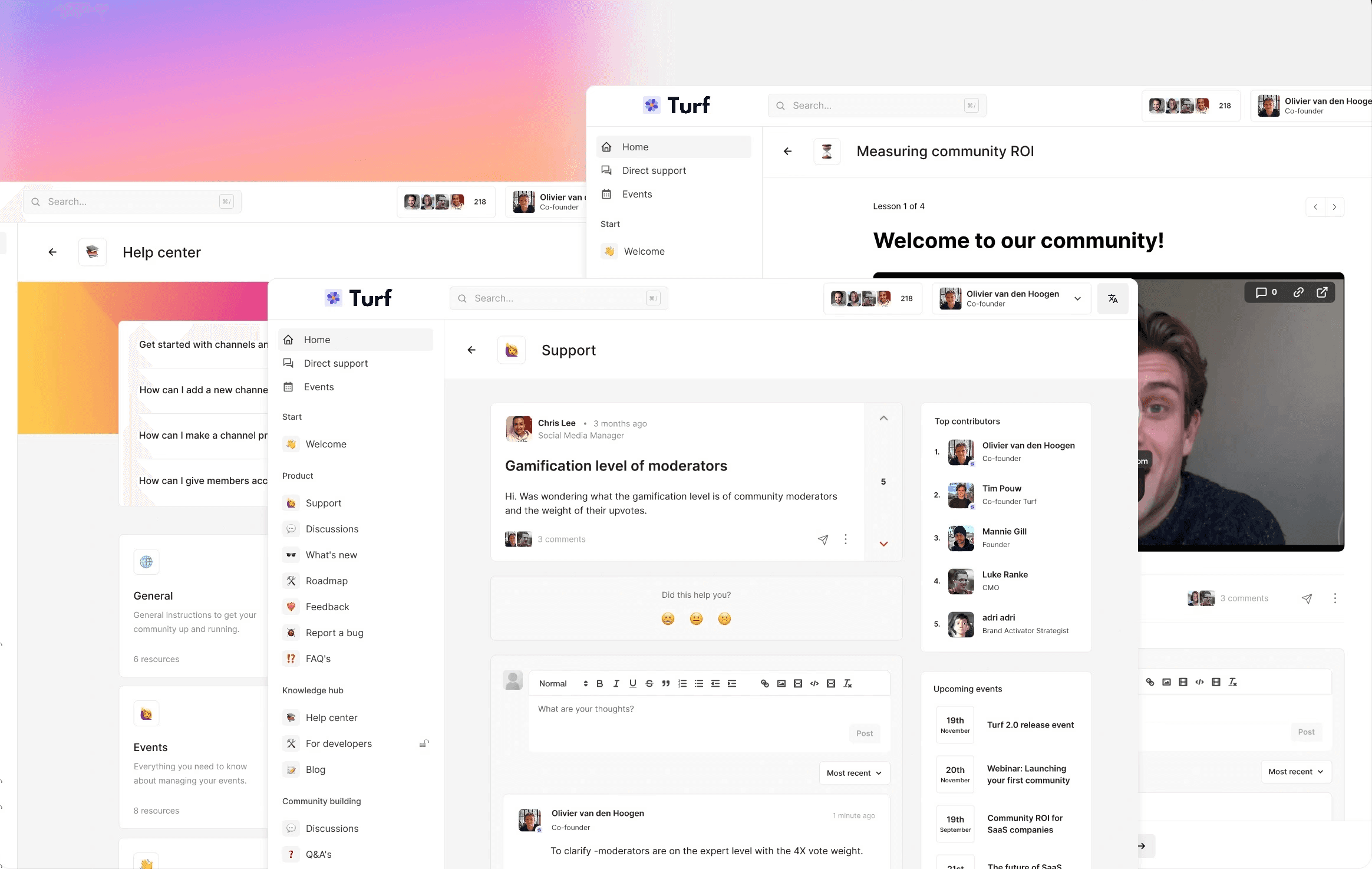
The most successful community platforms aren't afterthoughts bolted onto your product, they're integrated into your customer experience from day one. Platforms like Turf excel because they're embeddable within your existing customer interface, ensuring community becomes a natural part of how customers interact with your brand rather than another destination they need to remember to visit.
Key features that drive engagement include:
Embeddability inside your own product or website
Customizable forums and discussion threads that match your brand and use cases
Gamification and badge systems that reward participation and expertise
Advanced analytics that show you exactly what's working
Seamless integrations with your CRM and support tools
The best part? You don't have to choose between building community and maintaining control over your customer data. Unlike relying on platforms like Facebook Groups where you're subject to algorithm changes and limited analytics, dedicated community platforms give you ownership of the experience and insights into engagement patterns.
The Path Forward
Looking at where customer engagement is heading, the trend is clear: customers want authentic connections, peer support, and to feel part of something bigger than a transactional relationship with your software. Community platforms deliver on all three fronts while simultaneously improving your operational efficiency and providing invaluable product insights.
The question isn't whether community will become essential to customer success, it already is for leading SaaS companies. The question is whether you'll harness its power before your competitors do.
If you're ready to explore how an integrated community platform could transform your customer engagement and lower your churn rates, the data suggests there's never been a better time to start. Your customers are already having conversations about your product somewhere, why not create a space where those conversations benefit everyone, including you?